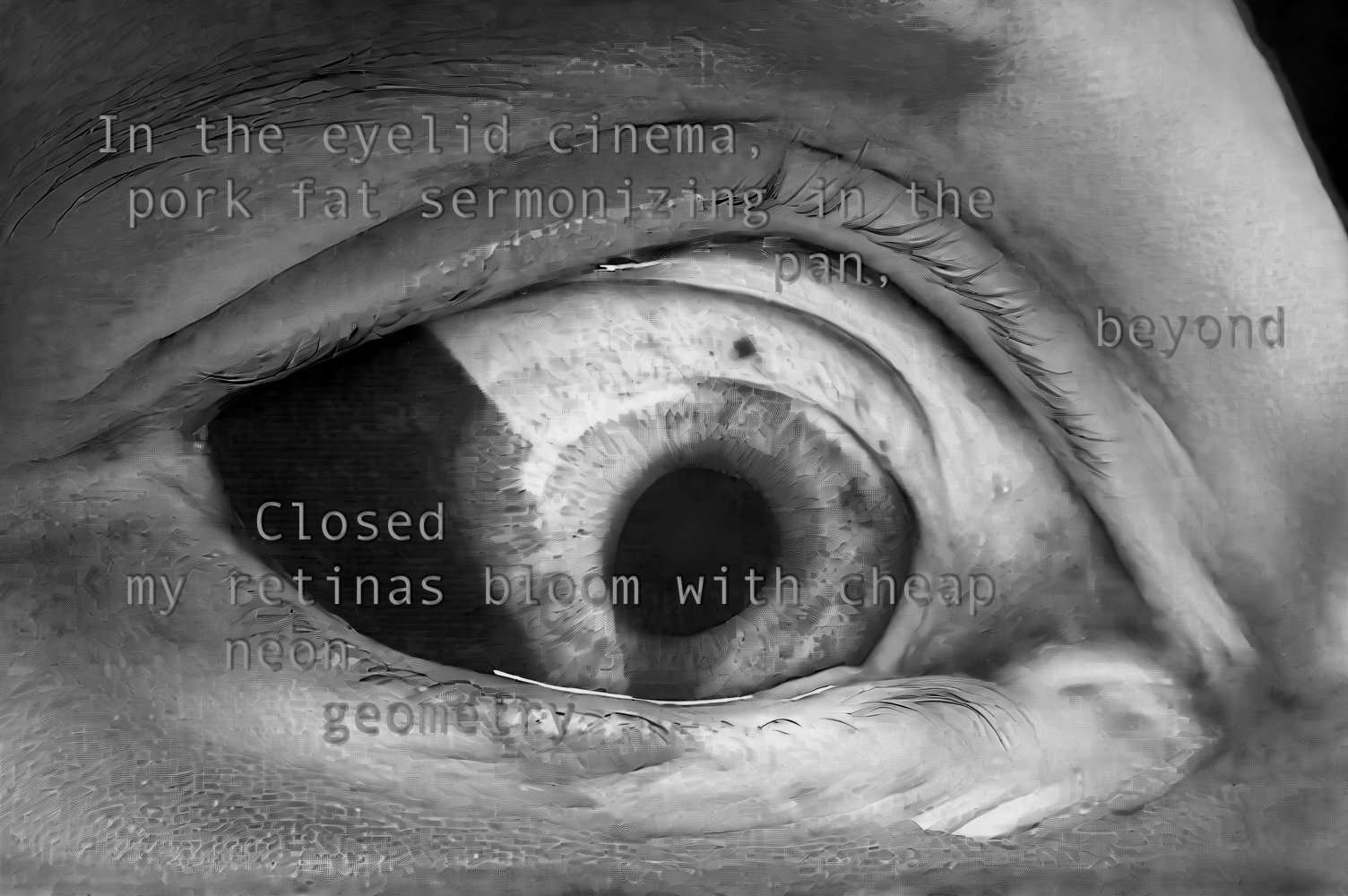
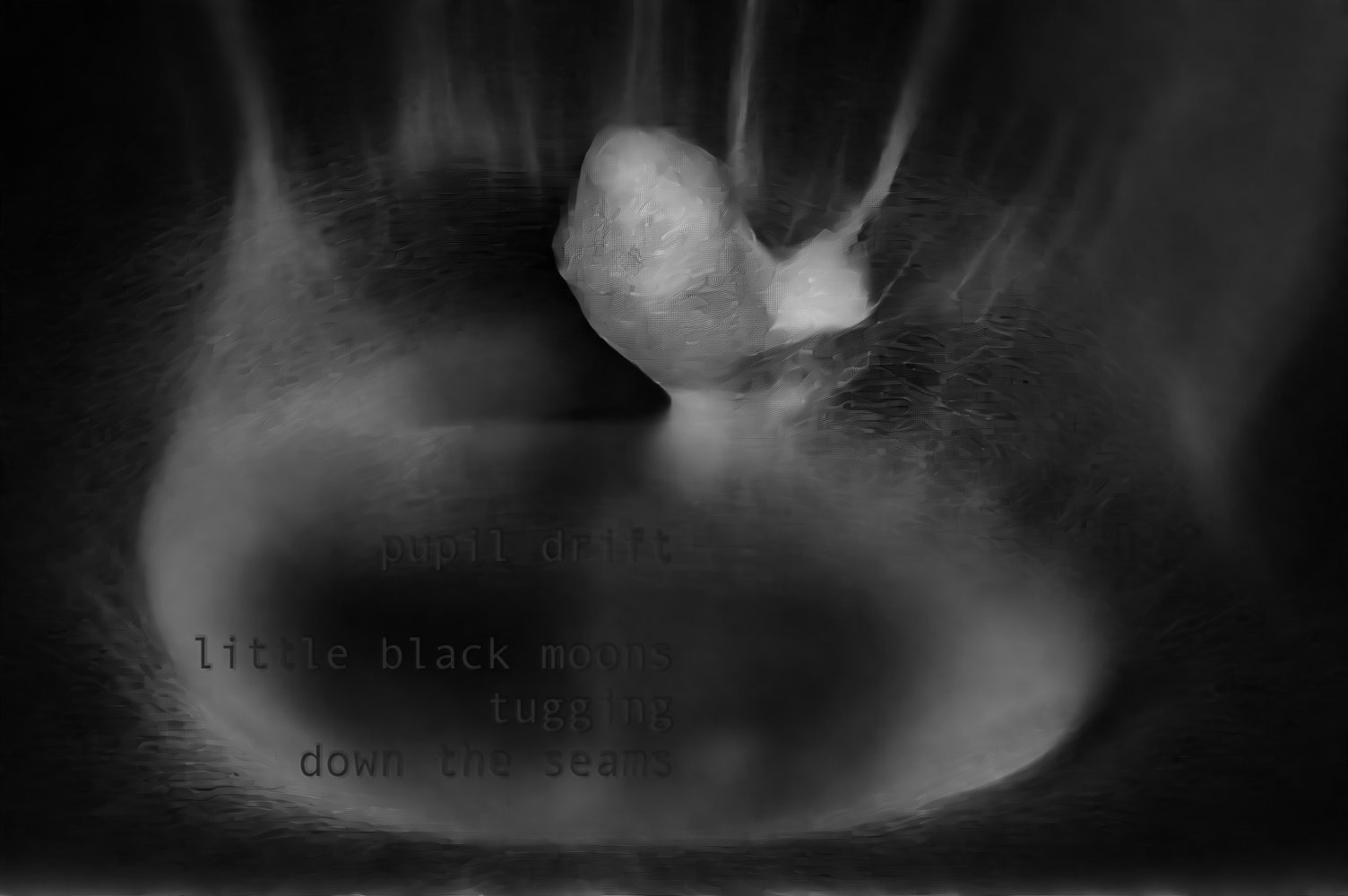
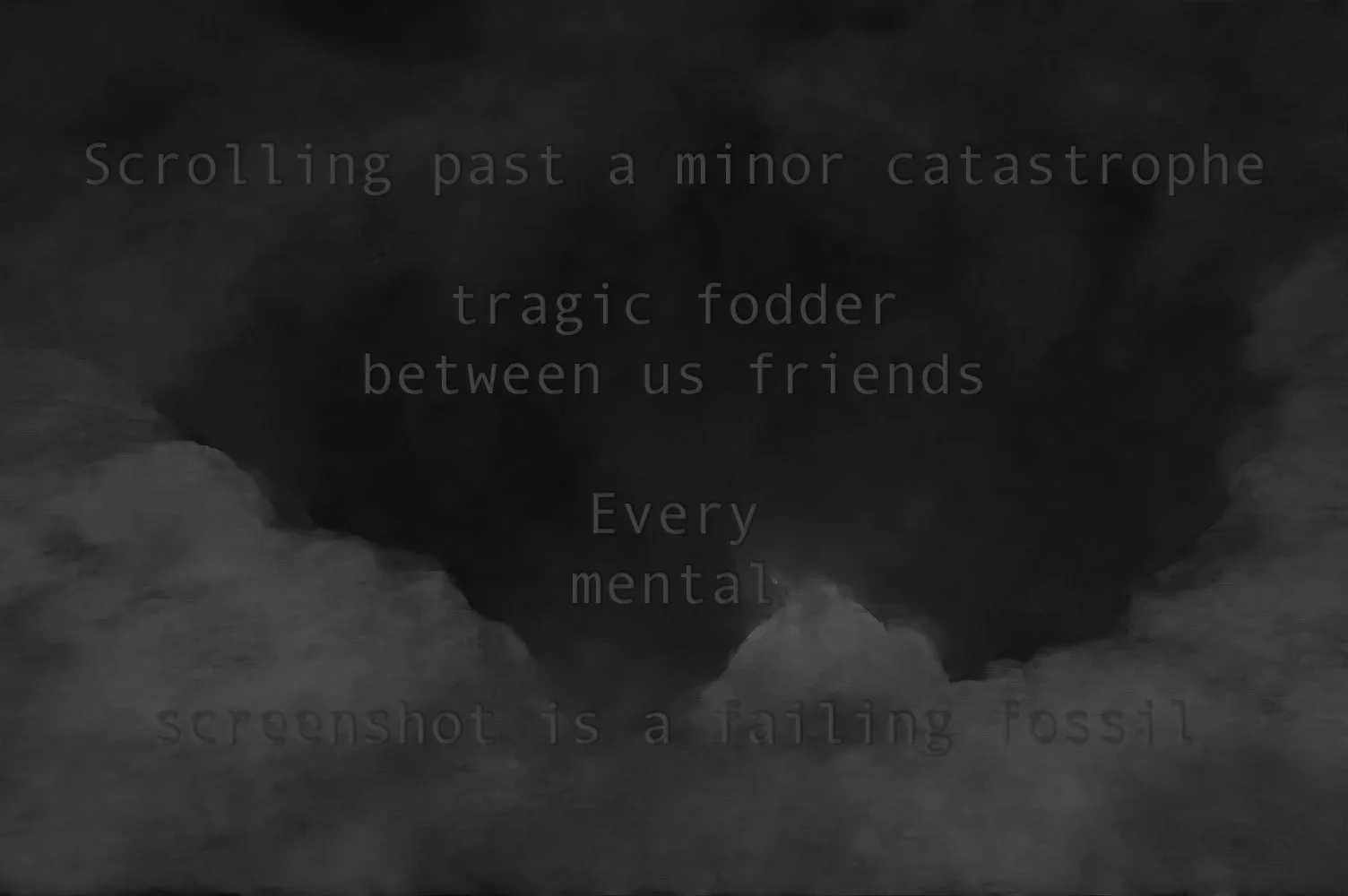
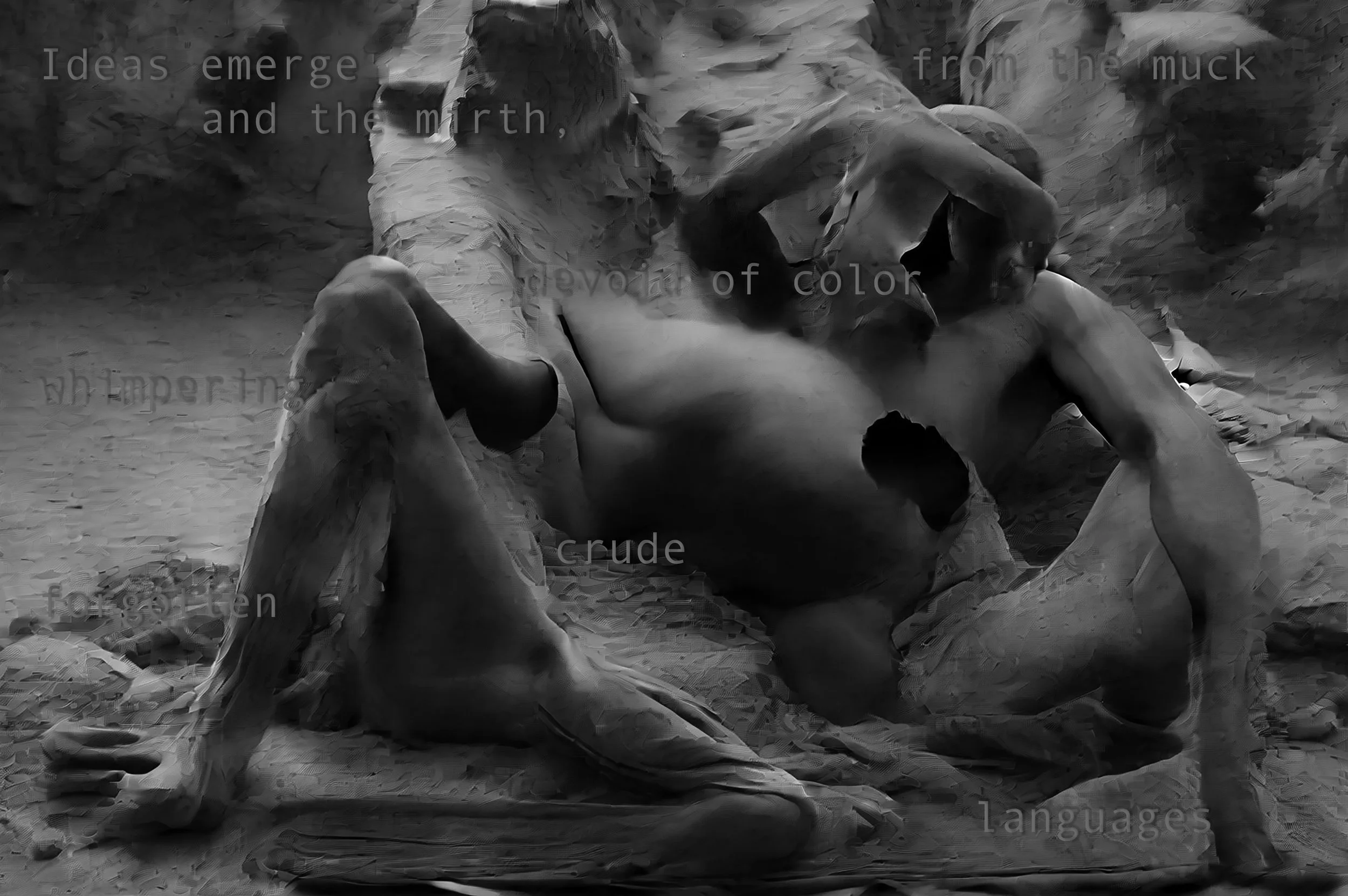
In the Eyelid Cinema (2026)
In The Eyelid Cinema is an inquiry into the state of hypnagogia, the threshold between waking thought and the onset of sleep. This state is where internal logic and sensory boundaries loosen, and spontaneous associations emerge. This transitional phase reveals a pre-lexical terrain in which fragments of thought and imagery arise before structured language or the narratives of dreams take hold. Hypnagogic experience is marked by the relaxation of executive cognitive control and a free flow of associations that often elude conventional language. Contemporary research suggests this state is closely linked to moments of heightened creativity and insight.
There is a conceptual overlap between this emergent state that the mind enters before sleep and the ideation process of generative AI models. Many contemporary models used in image generation are trained on vast datasets that include photographic imagery, embedding within them a latent cultural understanding of how images signify meaning. These models inherit photography’s longstanding entanglement with text. In The Eyelid Cinema engages this lineage obliquely by drawing attention to how text might function on a system influenced by photographic principles.
The works take the form of embossed poetic fragments on paper, where text functions as both material presence and phantom image, suggesting meaning through physically imprinting onto the image’s surface. This overlapping of language and image does not describe but conditions perceptual possibility, aligning with cognitive models of early linguistic processing that precede semantic understanding.